
Forest Area
Technical information
- Pre-painted steel
- Pre-painted galvanized steel
- Comparative characteristics of types of coatings
- Normative documents for the steel base
- Regulatory documents for rolled products with polymer coatings
- Definitions
- Requirements for coatings and appearance of profiled products.
- Quality control of rolled products with a protective coating used for the manufacture of profiled products:
- RAL color chart
Color Coated Steel
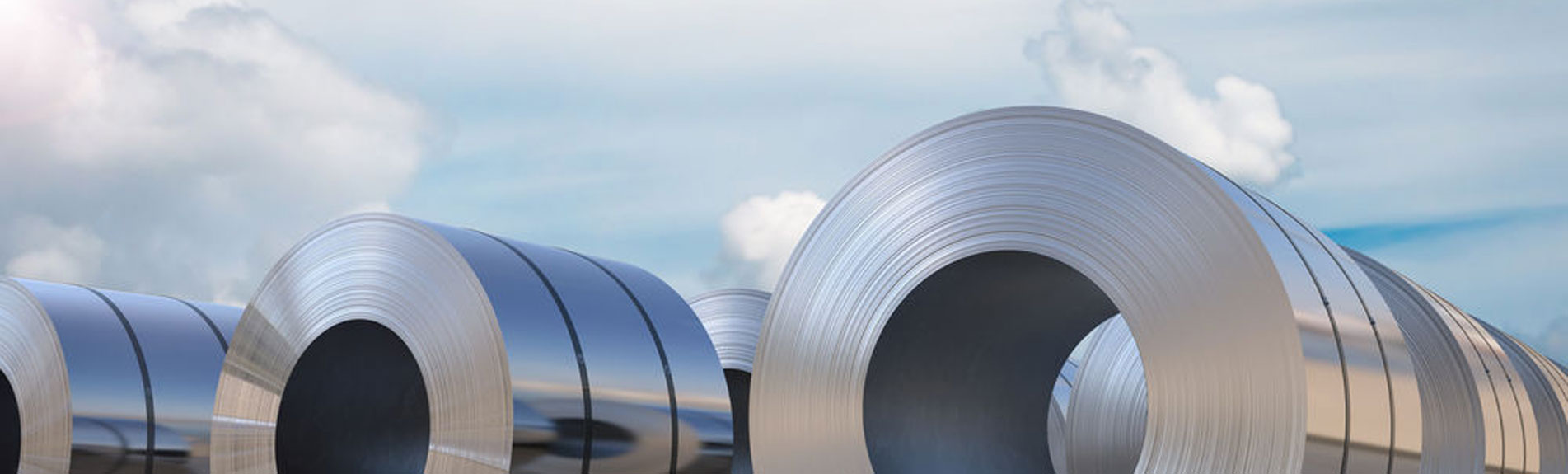
IMET SA supplies pre-painted metal sheets with adequate zinc content and high quality paint. The strength, formability and flexibility of the metal are combined with high resistance to the external environment and ensure the preservation of its functionality for many years. The complete range of products that IMET SA presents allows the customer to choose from the whole variety the necessary product in accordance with his needs. A huge selection of color palettes, from standard to hundreds of shades, can be offered to the customer (Ral color charts, www.ralcolor.com). Painting is carried out in strict accordance with international standards, including EN 10169.
Pre-painted galvanized steel
The basis of IMET SA products is zinc-coated steel coils intended for polymer coatings. Rolled steel is produced with one-sided or two-sided paint coating. The following types of coatings are possible:
- polyester or polyester - the coating withstands high air temperatures, has good corrosion resistance, high color fastness and plasticity. Heat resistance of the order of +120 0C, resistant to atmospheric influences. The coating thickness is 25 -30 microns, which leads to low resistance to mechanical stress;
- polyurethane - the coating is highly resistant to corrosion, mechanical damage, ultraviolet radiation, and significant daily temperature changes;
- polyvinyl chloride, or plastisol - a coating with a large thickness, resistance to mechanical damage. Its disadvantage is low temperature resistance and low UV resistance;
- epoxy and other types of paint and varnish coatings
Polyester is one of the most common polymers in the market for polymer coatings for galvanized steel sheet. Polyester coating can be glossy and matte (modified Teflon). Using polyester to coat galvanized steel sheet is a smart and cost effective choice.
Pre-painted galvanized steel sheet has a multi-layer structure: steel sheet, zinc layer, passivation layer, primer layer, and finally, protective paint on the bottom side of the sheet, and a color polymer layer on the front side. Polymer galvanizing is a material of a multilayer structure, which is selected carefully. Each layer has its own function.
Comparative characteristics of coating types
| Parameters | PVDF | Polyurethane | Plastisol | Matte polyester | Polyester |
|---|---|---|---|---|---|
| Coating thickness | 25-35 | 50 | 200 | 35 | 25 |
| Shine, Gardner 60° | 30 - 40 | - | 30 - 40 | - | 10 - 100 |
| Max. processing temperature, °С | 120 | 120 | 60 | 120 | 120 |
| Min. processing temperature, °С | -10 | -15 | -10 | -10 | -10 |
| Min. bend radius #1 | 1xt | 1xt | 2xt | 1xt | 2xt - 4xt |
| Min. bend radius #1 | 1xt | 1xt | 2xt | 1xt | 2xt - 4xt |
| Corrosion Protection #2 #4 | 4 | 5 | 5 | 4 | 3 |
| UV resistance #2 | 5 | 4 | 3 | 4 | 3 |
#1 - t = sheet thickness without polymer coating.
#2 - 5 = excellent, 4 = very good, 3 = good, 2 = fair.
#3- Ultraviolet radiation affects the color fastness of plastisols. Usually lighter colors are less affected.
#4 - Under normal climatic conditions. Specifications may change as coatings age.
The starting material for profiled products is thin-sheet cold-rolled rolled products with various protective coatings:
- hot dip galvanized
- Aluzinc hot dip coated
- hot dip galvanized with a polymer coating applied by a roller method in continuous units;
- with an aluminum-zinc protective layer and a polymer coating applied by a roller method in continuous units.
Regulatory documents for steel base
- N 10130-1991 Cold rolled low carbon steel flat products for cold forming. Specifications.
- EN 10142-2000 Hot-dipped galvanized steel for cold forming. Specifications.
- EN 10143-1993 Hot dip galvanized steel. Dimensional and shape tolerances.
- EN 10147-1995 Hot dip galvanized structural steel.
- EN 10292-03 Hot-coated high yield steel sheet and strip for cold forming.
Regulatory documents for pre-painted steel
- EN 10169-1 - 2003 “Continuous organic coated strip (coated coils)”.
- EN 10169-1-2003 Continuously applied organic coated steel flat products. Part 1: general information (definition, materials, tolerances, test methods).
- ENV 10169-2:1999 Continuous organic coated steel flat products
- JIS G3312: 2005 “Hot-dipped galvanized steel sheets and coils with color coating”.
- EN ISO 2409 Paints and varnishes. Grid notch test.
- EN ISO 6272 Paints and varnishes. Impact test.
- ISO 7253 Paints and varnishes. Determination of resistance to neutral salt fog.
Definitions
- Steel base: The base material is rolled steel sheet without a metal coating in the form of zinc or zinc-aluminum alloy.
- Protective coating - a metal or combined (metal + polymer) coating to protect the surface from external factors and give it a decorative look.
- Zinc coating - a coating obtained on the surface of rolled products by immersing it in a zinc melt.
- Zinc-aluminum coating is a coating obtained on the surface of rolled products by immersing it in a liquid alloy of zinc, aluminum, with additions of other metals.
- Galfan is a Zn alloy with 4.7-6.2% Al and misch metal additives containing Ln, Ce and other elements.
- Aluzinc is an alloy composed of 55% aluminum (Al), 43.4% zinc (Zn) and 1.6% silicon (Si).
- Tough-pass coating is a coating obtained as a result of cold rolling of steel with a metal coating in a skin-pass mill, characterized by a reduced surface roughness.
- Polymer coating - a film based on high-molecular compounds on the surface of a protective metal coating of rolled products, formed during hot drying of liquid paints and varnishes applied by the roller method (primers, finishing and protective enamels of a certain composition), which has a complex of protective, physical-mechanical, decorative and other special properties.
- Primer layer is the bottom layer in a multi-layer polymer coating system applied directly to the surface of the protective metal coating of rolled products, designed to improve the adhesion of the decorative coating to the surface of the rolled stock.
- Cut edge of rolled stock - an edge that has been cut off after cold rolling (for uncoated steel products) and after the process of applying a protective metal coating.
- The front side of rolled products with a protective coating is the side exposed to external factors.
- The reverse side of rolled products with a protective coating is the side opposite to the front side.
- Two-layer polymer coating - a coating consisting of a primer layer and a decorative polymer finishing layer.
- Single-layer primer coating - any type of coating on the reverse side of the rolled products, which is not subject to special requirements in terms of appearance, corrosion resistance, elasticity, etc.
- Single-sided polymer coated steel is steel with a two-layer polymer coating on the front side and a single-layer polymer coating on the reverse side of the rolled product, applied to protect the coating of the front side of the rolled product from mechanical damage during transportation and storage.
- Pre-painted steel products with a two-layer polymer coating on the front and back sides.
- The elasticity of a coating is the ability of a material to resist cracking and peeling in a T-bend test.
- Coating Thickness - The total thickness of the organic coating on either side.
- Metal roof tiles are steel cold-formed sheet profiles produced by roll forming machines that look like traditional ceramic tiles and are used in roof structures.
- Profiled steel decks are steel cold-formed sheet profiles with trapezoidal and wavy corrugations, produced on roll forming machines and used in various structural elements of buildings and other building structures for industrial and civil purposes.
- Non-aggressive atmosphere - the atmosphere of the countryside, suburbs, remote from industrial complexes, intra-city spaces.
- Slightly aggressive atmosphere - the atmosphere in the area of city streets and main roads, rural areas in a humid climate, coastal areas of the seas and large lakes.
- Moderately and strongly aggressive atmosphere - the atmosphere of the area adjacent to the enterprises of ferrous metallurgy, chemistry and petrochemistry, coal-fired thermal power plants, within urban highways with the most heavy traffic, proximity to areas subject to pollination from the air by chemical compounds, etc.
The characteristics of rolled products with polymer coatings are divided according to the type of steel base with a protective metal coating:
- cold-rolled hot-dip galvanized sheet metal
- Aluzinc-coated cold-rolled thin sheet
- cold-rolled sheet steel with galfan coating
| Coating type and material | Symbol | Typical coating thickness range, µm | Typical coating thickness µm3) |
|---|---|---|---|
Primers |
|||
| Polyester primer | - | 5-7 | - |
Protective enamels |
|||
| Epoxypolyester enamel | - | 5-15 | - |
Paint |
|||
| Epoxy | EP | 3-20 | Not set |
| Polyester | SP | 5-60 | 254 |
| Polyester matt | - | - | 35 |
| Polyurethane | PUR | 10-60 | 25 |
| Polyamide modified polyurethane | PUR-PA | 10-50 | 25 |
| Polyvinylidene fluoride | PVDF | 20-605 | 25 |
Plastisole |
|||
| Polyvinyl chloride plastisol | HPS | 40-2004 | 100-200 |
Notes:
- Coating material information is for reference only.
- The 15 µm thick coating is usually applied in a two-layer system:
primary (primer) layer plus top coat. Types of coatings and their composition may be different. - Nominal coating thicknesses apply unless otherwise specified at time of order.
- Applies to embossed and textured coating thicknesses.
- Consists of a primer (primer) coat and usually a top coat (intermediate coats are also available).
by type of coating:
- one-sided;
- double-sided;
- single layer;
- layered
according to the thickness of the base:
- from 0.25 to 1.2 - for a hot-dip galvanized base;
- from 0.4 to 1.2 - for a steel base with an aluminium-zinc coating.
by coating thickness according to the accuracy of rolling the steel base:
- normal - BT;
- increased - AT;
- special - S.
Requirements for coatings and appearance of profiled products.
- Protective coated steel used for the manufacture of profiled products must comply with the requirements of regulatory documents;
- The quality of the coating on the front side (in the case of double-sided coating - both sides) must correspond to the indicators in the table below.
| Polymer coating quality index Coating type |
|||||
|---|---|---|---|---|---|
| Polymer coating quality index | polyester | polyester matt | polyurethane | Polyvinyldenfluoride | plastisol |
| Coating thickness, mm | see table 1 | see table 1 | see table 1 | see table 1 | see table 1 |
| Color (color difference) | no more than 1 | no more than 1 | no more than 1 | no more than 1 | no more than 1 |
| Mirror gloss, units of gloss | 10-80 | - | 10-60 | 10-80 | 10-60 |
| Adhesion score | no more than 0 | no more than 0 | no more than 0 | no more than 0 | no more than 0 |
| Bending elasticity of the coating, "T" | no more than 1.5T | no more than 1T | no more than 0.5T | no more than 1.5T | no more than 0.5T |
| Adhesion strength at reverse impact, J | not less than 10J | not less than 15J | not less than 15J | not less than 10J | not less than 15J |
| Pencil Hardness | В-НВ-F-Н-2Н | F | Н-2Н | Н-2Н | V-NV-F-N |
| Neutral salt fog resistance, hour | 500 | 500 | 1000 | 1000 | 1000 |
| Methyl ethyl ketone (MEK) abrasion resistance, number of double passes | > 100 | not standardized | > 100 | > 100 | not standardized |
The protective zinc or aluzinc coating of profiled products must be continuous. Disruption of the continuity of the coating in the form of cracking is not allowed.
On the front side of profiled products with zinc and aluminum-zinc coating, the following are allowed:
- scratches and abrasions (dark dots and spots) that do not disturb the continuity of the coating
- light and matte spots
- Uneven coloration of the passivation film
- local roughness of the coating, grains, uneven crystallization of zinc and alu-zinc coatings
- matte and blurry crystallization pattern. The size and pattern of the crystallization pattern is not regulated and is determined by the rolled product manufacturer
- on the covered corrugation of the finished product, sagging, sagging and layering without cracking are allowed
The protective and decorative polymer coating should form an even, continuous, uniform and monophonic structure, with or without embossing.
On profiled products with a polymer coating, the following are allowed:
- areas of different shades and areas of different gloss
- areas and individual surface irregularities
- individual defects no larger than 3 mm, not penetrating to the metal base, or small groups of such defects located periodically or randomly
- separate areas with distortion of the embossing pattern (relief)
- on the covered corrugation of the finished product, shagreen, pockmarks, individual scratches are allowed
- coating defects (including imperfections) at a distance of no more than 3 mm from the rolled edge
On the surface of zinc, aluzinc and polymer coatings, abrasions, marks, traces of shaping rolls are allowed, which do not disturb the continuity of the coating.
On the covered corrugation of profiled sheets, prints, overpressures and jams are allowed, which are covered by the top sheets during installation.
Color shades and gloss of the coating are not regulated by the manufacturer of profiled products and are determined by the manufacturer of the rolled material.
Single-layer protective polymer coating on the reverse side of the rolled products must be continuous. The thickness, color and texture of the protective coating on the back side are determined by the manufacturer of the roll material.
The edges of profiled products must be free of burrs, cracks and notches.
Quality control of rolled products with a protective coating used for the manufacture of profiled products:
Revêtement de protection en zinc ou en aluminum doit être continu. Des irrégularités de la continuité sous forme de fissures ne sont pas admises.
Sur le côté facial des profilés avec un revêtement en zinc et aluminum sont admis:
- rayures et usure (points foncés et tâches) ne dérogeant pas à la continuité du revêtement
- tâches claires and opaques
- irrégularité de la peinture d'un film de passivation
- irrégularité locale du revêtement, grains, irrégularités de cristallisation du revêtement en zinc et en aluminum et zinc
- dessin de cristallisation opaque et diffus. La taille et le motif du dessin de cristallisation ne sont pas réglementés et sont définis par le producteur du laminé
- debordements, concretions and stratifications
Revêtement décoratif de protection doit former une structure homogène, continue, uniforme et de la même couleur, avec ou sans etampage.
Sur des articles profilés avec revêtement polymérique sont admis:
- plages avec des teints et éclats différents
- plages et parties isolées revêties irrégulièrement
- défauts isolés ne dépassant pas 3 mm, ne pénètrent pas jusqu’à a la base métallique ou de petits groupes de tels défauts situés d’une façon ou chaotique
- parties isolées avec une altération du dessin (relief) de l'estampage
- chagrins, grains, rayures isolées sont admis sur une gaufre de l'article fabriqué
- défaut du revêtement (les espaces non-peints inclus) ne dépassant pas une distance de 3 mm du bord du laminé
Sur une surface du revêtement en zinc, en aluminum et zinc et du revêtement polymérique sont admis: l'usure, stries, traces des reliefs de rouleaux n'altérant pas la continuité du revêtement.
Sur une gaufre de couverture des profilés sont admis empreintes, défoncements, et moletages couverts par les feuilles supérieures lors de montage.
Des nuances de couleurs et d'éclat du revêtement ne sont pas règlementés par le producteur des profilés et sont définies par l'usine-constructeur de matériaux en rouleaux.
Un revêtement polymérique de protection à une couche sur le revers du laminé doit être continu. L'épaisseur, la couleur et la texture du revêtement de protection sont définies par l'usine-constructeur de matériaux en rouleaux.
Les bords des profilés doivent être sans bavures, brèches et crénelures.
RAL Color Chart
There are several color coding standards. The most popular of these is RAL, developed by the “German Institute for Quality Assurance and Certification RAL” in 1927. Within the framework of this standard, each shade of any color has its own digital index - this is the RAL standard. Many manufacturers of polymer coatings for galvanized steel adhere to standard colors from the RAL catalog.
There are many variations of passages of Lorem Ipsum available, but the majority have suffered alteration in some form, by injected humour, or randomised words which don't look even slightly believable. If you are going to use a passage of Lorem Ipsum, you need to be sure there isn't anything embarrassing hidden in the middle of text. All the Lorem Ipsum generators on the Internet tend to repeat predefined chunks as necessary, making this the first true generator on the Internet. It uses a dictionary of over 200 Latin words, combined with a handful of model sentence structures, to generate Lorem Ipsum which looks reasonable. The generated Lorem Ipsum is therefore always free from repetition, injected humour, or non-characteristic words etc.
"Sed ut perspiciatis unde omnis iste natus error sit voluptatem accusantium doloremque laudantium, totam rem aperiam, eaque ipsa quae ab illo inventore veritatis et quasi architecto beatae vitae dicta sunt explicabo. Nemo enim ipsam voluptatem quia voluptas sit aspernatur aut odit aut fugit, sed quia consequuntur magni dolores eos qui ratione voluptatem sequi nesciunt. Neque porro quisquam est, qui dolorem ipsum quia dolor sit amet, consectetur, adipisci velit, sed quia non numquam eius modi tempora incidunt ut labore et dolore magnam aliquam quaerat voluptatem. Ut enim ad minima veniam, quis nostrum exercitationem ullam corporis suscipit laboriosam, nisi ut aliquid ex ea commodi consequatur? Quis autem vel eum iure reprehenderit qui in ea voluptate velit esse quam nihil molestiae consequatur, vel illum qui dolorem eum fugiat quo voluptas nulla pariatur?"